


History & Traditions
It started as an attempt to tame the rough Kansas territory more than 160 years ago and has evolved into a comprehensive and highly respected university serving students across campuses in Kansas and online around the world.


01/03
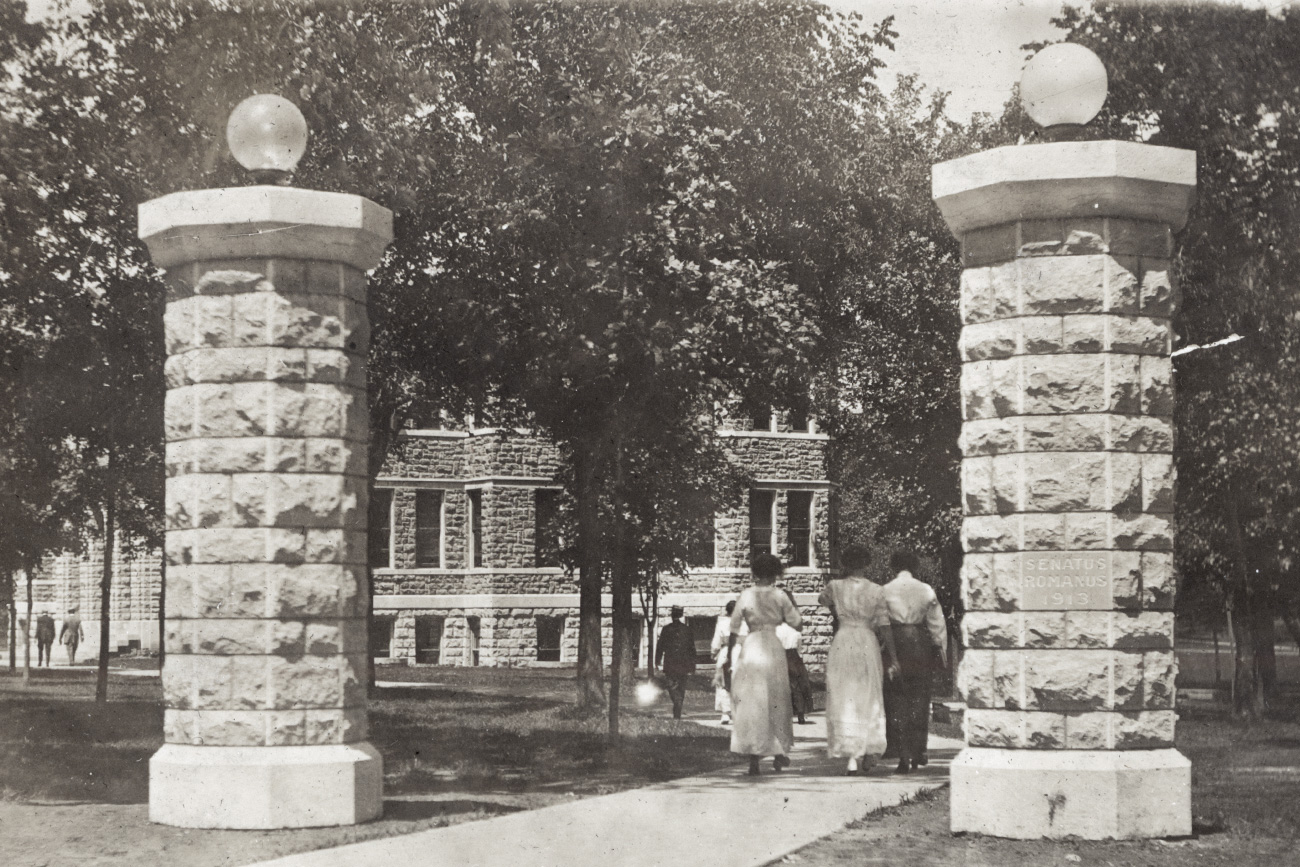
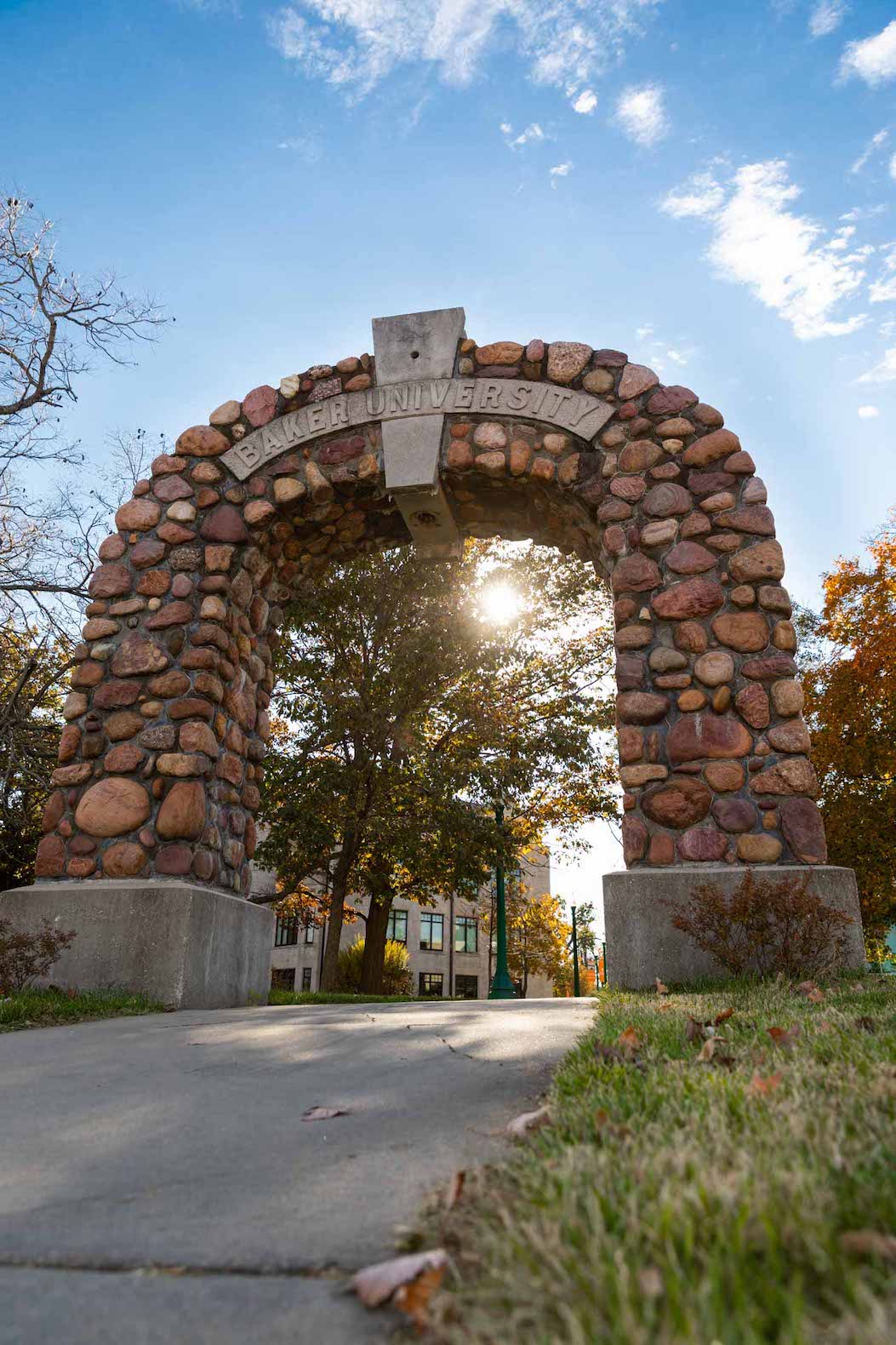
The Gates of Baker University
Passing on the traditions through generations.
Baker University’s class of 1891 began the tradition of naming itself and at graduation bequeathing its title to the incoming freshman class. There are four class organizations:
- Senatus Romanus | 2025
- King Arthur’s Court | 2026
- House of Hanover | 2027
- Columbian Commonwealth | 2028
Incoming freshmen classes begin their class’s tradition by officially entering campus on Traditions Night through their class gate. When they graduate, they depart Baker the same way, through their gate.
Class Organizations
House of Hanover
-
Founded: 1891, the first of the four class societies.
-
Inspiration: German and English history, with rituals patterned on Teutonic sagas and pageantry drawn from the Nibelungenlied.
-
Colors: Navy Blue and Gold.
-
Officer Titles: King, Queen, Crown Prince, Crown Princess, Duke, Duchess, Count, Countess, Prime Minister, Canon of Westminster, Court Fool, Class Historian.
-
Traditions:
-
The Class of 1895 inaugurated Baker’s first annual, Orange Blossoms. Within it was Ida Ahlborn Weeks’ German poem Ein Lied für das Haus Hanover, cementing the House’s cultural tone.
-
Class Day performances drew on German theatre, including plays staged at the president’s home.
-
Members were known for their oratory skill and athletic prowess, positioning Hanover as both intellectual and physical leaders.
-
-
Gifts to the University: Reading lamps for the library, stained-glass windows in the church, and later, the athletic field’s west parking lot.
-
Class Gate: East side of campus. For many years Hanover had no physical gate — a symbolic absence compared to the other Houses. In 2014, students proposed and advocated for a Hanover gate to complete the four-gate tradition, underscoring the importance of architectural continuity for alumni identity.
-
Symbols & Yell: Ho für den König, Ho für den Hof, Hanover ein und neunzig.
-
Continuity of Classes: 1899, 1903, 1907 … continuing every four years through 2031.
-
Modern Context: Hanover represents the origin of Baker’s gate tradition, embodying the rebirth of campus memory when Traditions Walk was revived in the 2000s. Its missing gate became a rallying point for students and alumni to restore completeness to Baker’s landscape.
Columbian Commonwealth
-
Founded: 1892, the second House.
-
Inspiration: The early American republic, drawing from the U.S. Constitution and Cabinet.
-
Colors: Red, White, and Blue.
-
Officer Titles: President, Vice President, Secretary of State, Secretary of Treasury, Attorney General, and other civic positions.
-
Traditions:
-
Their first annual, The Baker Hatchet (1893), featured class members in Washington-era costumes.
-
Pageants drew on Revolutionary and frontier imagery, blending patriotism with campus culture.
-
Their motto “Deeds, not dreams” emphasized pragmatism and service.
-
-
Gifts to the University: Case Library drinking fountains, the library clock, choir robes, the chapel pulpit desk, and the West Gate.
-
Class Gate: West side of campus. Its presence became a symbolic “entry from the frontier,” tying the House’s American theme to Baldwin City’s prairie setting. The West Gate today serves as a powerful anchor of the revived Traditions Walk.
-
Distinctions: Commonwealth students were recognized leaders in debate and athletics, embodying the House’s emphasis on civic life.
-
Continuity of Classes: 1896, 1900, 1904 … continuing every four years through 2028.
-
Modern Context: Columbian Commonwealth is often remembered as the most visibly patriotic House. Its West Gate is a physical marker for alumni gatherings and a key point in the ceremonial walk through campus.
Senatus Romanus
-
Founded: 1893.
-
Inspiration: The Roman Senate, evoking authority, order, and classical republican ideals.
-
Colors: Purple and White.
-
Officer Titles: Consul Primus, Consul Secundus, Censor Primus, Censor Secundus, Quaestor, Praetor, Tribune, Augur, Pontifex Maximus, Aedile.
-
Traditions:
-
First public act was a Roman banquet, announcing their founding.
-
Commencement pageants drew on Roman history and mythology, connecting Baker students to the grandeur of antiquity.
-
Early classes adopted a yell: Io! Ho! Nihil Umquam Vincet Classem Nonaginta Septem!
-
-
Gifts to the University: Gates at the southwest and north entrances, framed art for the library, stone borders for Lake Parmenter, and $465 toward the athletic field’s memorial fence.
-
Class Gate: Southwest corner of campus. Of all the gates, Senatus Romanus’ is the most classically symbolic, positioned as a dignified sentinel for the campus. It is frequently tied to graduation traditions, as students walk outward through it at Commencement.
-
Motto: Volens et Potens (“Willing and Able”).
-
Continuity of Classes: 1897, 1901, 1905 … continuing every four years through 2029.
-
Modern Context: Senatus Romanus has the strongest ties to symbolic permanence — their gates still stand as markers of endurance, visibly connecting Baker to both its own history and the universal tradition of civic duty and governance.
King Arthur’s Court
-
Founded: 1894.
-
Inspiration: The romance of Arthurian legend and Tennyson’s Idylls of the King, blended with classical Greek ideals.
-
Colors: White and Gold.
-
Officer Titles: King Arthur, Queen, Merlin the Wizard, Dagonet, Excalibur, and other roles tied to legend.
-
Traditions:
-
Their annual, Excalibur, celebrated the imagery of the Round Table.
-
Pageants dramatized Arthurian myth, infusing Baker’s commencement ceremonies with poetry and legend.
-
Their class song, to the tune of “Canadian Maple Leaf,” begins Heigh ho! Ye Knights of old, King Arthur’s Court forever.
-
-
Gifts to the University: The large clock in the gymnasium tower, a bell tower near Old Science Hall, a cement tennis court, and a major gift to the 1930 Million Dollar Endowment Campaign.
-
Class Gate: Northeast corner of campus. Known for its romantic setting, this gate became an iconic gathering point. Walking through it at graduation symbolizes a knightly passage, aligning with Arthurian quests.
-
Distinctions: The Court’s legacy is one of imagination and artistry, with enduring gifts that blended functionality (tennis court, clock) and symbolic grandeur.
-
Continuity of Classes: 1898, 1902, 1906 … continuing every four years through 2026.
-
Modern Context: King Arthur’s Court embodies the mythic imagination of Baker — its gate and gifts emphasize timelessness, echoing both medieval ideals and the university’s own enduring character.